Game Day Appetizer for Babies & Toddlers: Safe, Nutritious, and Fun!
The information here is strictly educational and not medical advice. It should not substitute professional medical consultation.
Game day spreads are a beloved tradition—chips, dips, cheese, veggies, and all the finger foods that make watching the big game even better. But if you have a baby or toddler, you might look at that beautiful appetizer tray and think, "Well, none of this is safe for my little one."
Good news: with a few simple modifications, you can create a game day appetizer tray that's safe, nutritious, and perfect for babies and toddlers—while still being delicious enough for the whole family to enjoy!
As a Pediatric Nurse Practitioner and mom of three, I'm all about making family meals inclusive without sacrificing safety or nutrition. Today, I'm showing you how to transform a classic game day spread into a baby-friendly feast that supports your little one's development while keeping them safe from choking hazards.
Why This Matters for Your Baby's Development
Before we dive into the how-to, let's talk about why this approach matters:
Nutrient-Dense Foods for Growing Brains: Babies and toddlers need healthy fats, protein, and a variety of nutrients to support their rapid brain development. Foods like avocado (packed with healthy fats), chicken (iron rich), and colorful vegetables (vitamins and minerals) are foundational for their growth.
Early Food Exposure: Exposing babies to a variety of flavors and textures during the first 1,000 days helps lay strong eating and health foundations. Game day is a perfect opportunity to introduce new foods in a fun, low-pressure environment.
Safe Feeding Practices: Knowing how to modify foods to be age-appropriate reduces choking risk and builds your confidence as a parent. You don't have to miss out on family traditions—you just need to know how to adapt them safely. Download our FREE Choking First Aid Guide, with a full list of choking hazards, how to modify the feeding environment, and what to do in a choking emergency.
Family Meals Matter: Including your baby or toddler in family eating experiences—even game day snacking—teaches them social eating skills and makes them feel like part of the family.
The Baby-Friendly Game Day Appetizer Tray
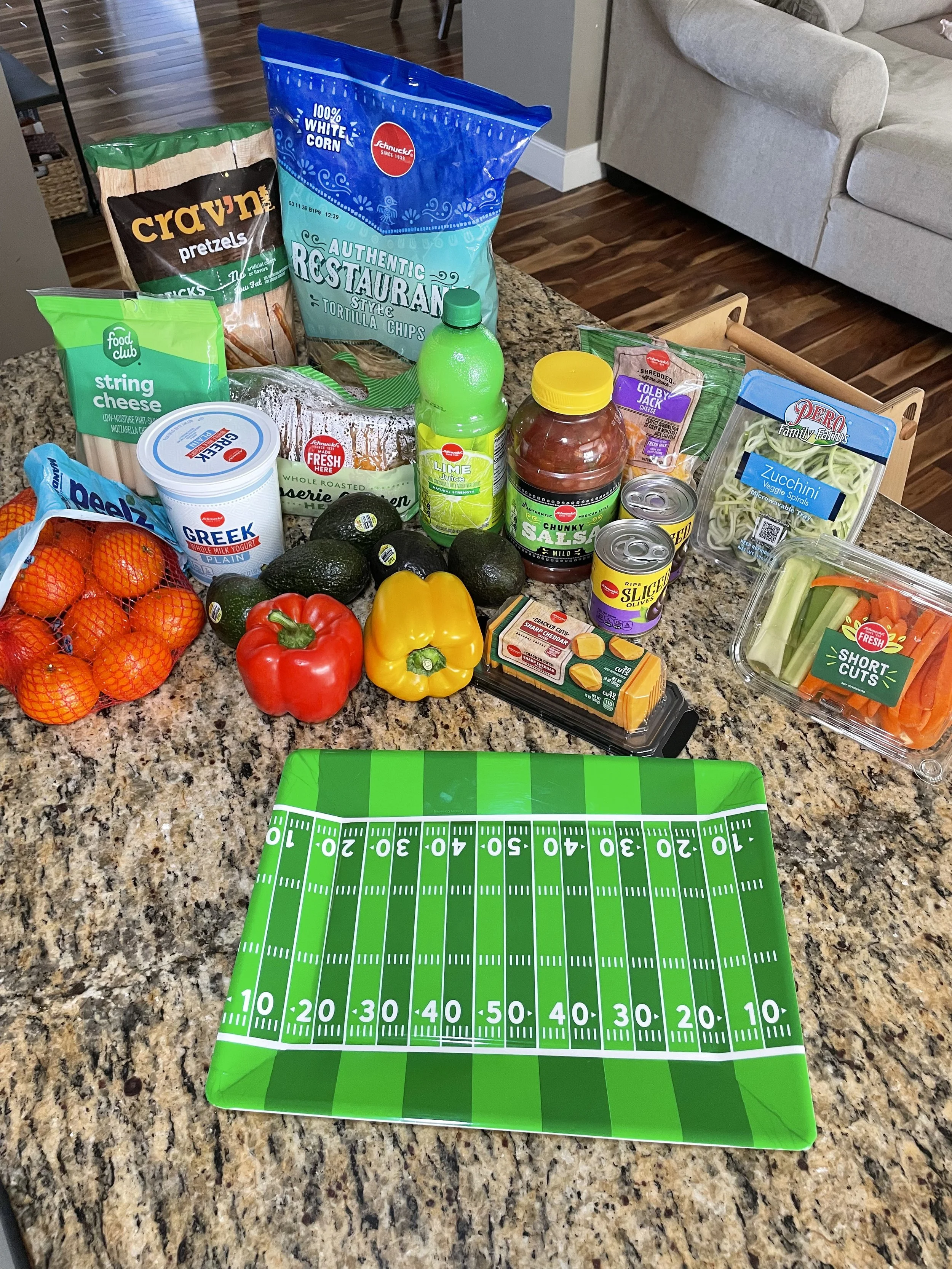
Here's what you'll need and how to modify each component for safety and nutrition:
Ingredients & Setup:
Tortilla chips
Pretzels
Salsa
Guacamole (Baby-Friendly Recipe Below)
Chicken salad (Baby-Friendly Recipe Below)
Cheese slices
Bell peppers
Carrots
Celery
Olives
Fun meal time tray!
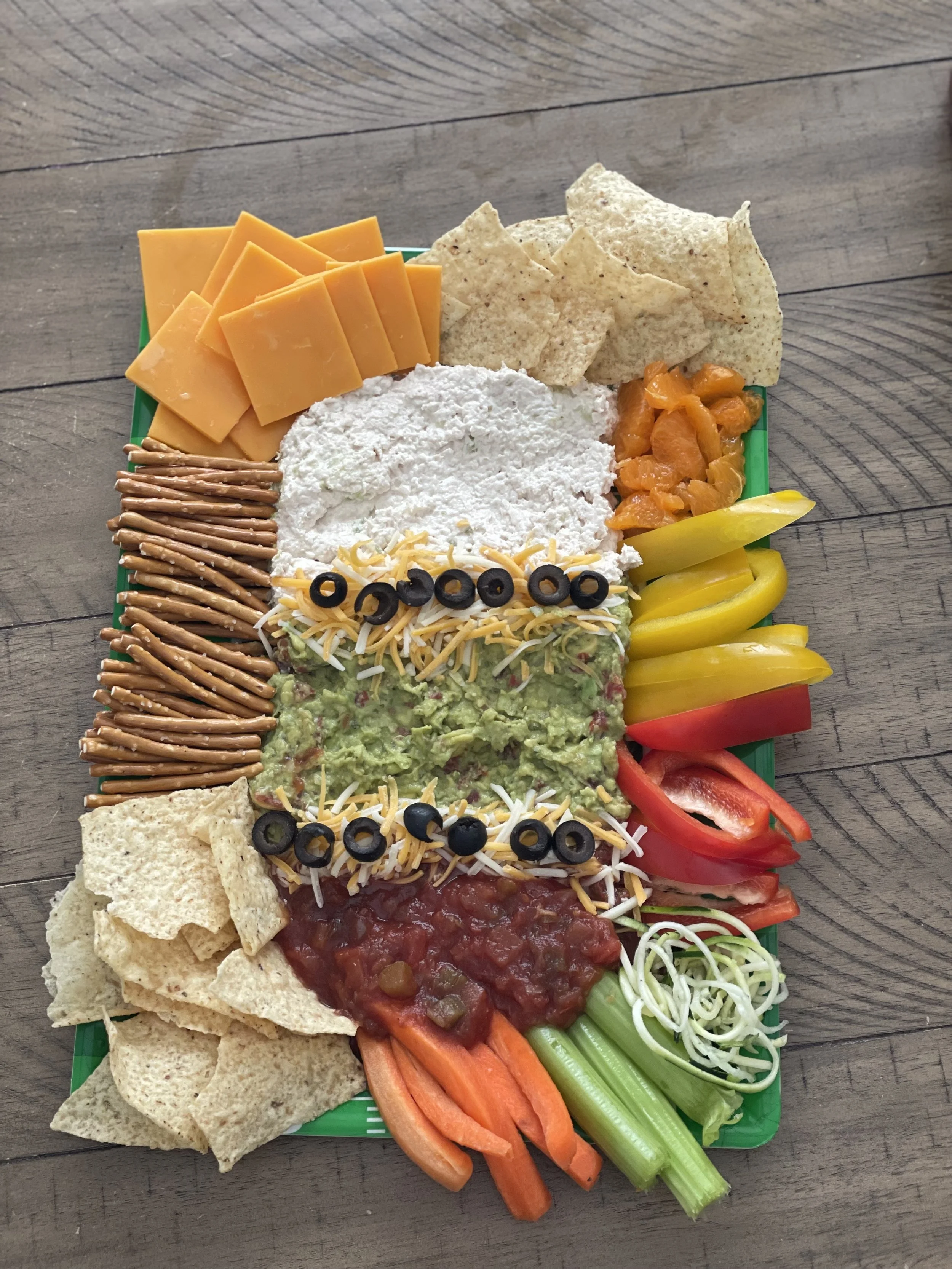
Assemble your Tray
You can display the foods on your tray however you want, here I how I layered mine on!
How to modify for baby based on Age
For Babies 6-9 Months:
Guacamole (See Homemade Recipe Below):
Serve on preloaded spoons or spread thinly on toast strips
Great source of healthy fats for brain development
Chicken Salad (See Homemade Recipe Below):
Use rotisserie chicken minced very finely and mixed with full-fat Greek yogurt
Serve on preloaded spoons
Vegetables:
Carrots: Steam until very soft and serve in long strips for baby to hold and gnaw on
Bell peppers: Steam until soft and serve in large wedge shapes
Both should be soft enough to squish between your fingers
Cheese:
Can mix shredded cheese into the guacamole or chicken salad, or skip for now.
Olives:
Mash and serve on a pre-loaded spoon
Chips/Pretzels:
Skip (choking hazard and too much salt)
Instead, Offer long strips of lightly toasted bread as a carrier for dips
For Babies 9-12 Months:
Guacamole & Chicken Salad:
Continue serving on preloaded spoons or spread on toast, allow them to experiment with dipping if they have interest!
Vegetables:
Carrots: Long steamed strips OR soft bite-sized pieces
Bell peppers: Long steamed strips OR soft bite-sized pieces
Still should be very soft and squishable
Cheese:
Shredded cheese
Olives:
Thinly sliced circles
Salsa:
Can be introduced in small amounts
Note: Tomatoes and citrus are acidic and may cause a harmless rash around the baby's mouth or on their bottom—this is normal and not dangerous, but can be minimized by wiping their face/hands after eating
Chips/Pretzels:
Still skip (choking hazard and excess sodium) and opt for using toast strips (lenght of 2 adult fingers and width) as an option for the dips as a carrier if not using spoons.
For Toddlers 12-24 Months:
Guacamole & Chicken Salad:
They can start self-feeding with utensils or continue with preloaded spoons
Vegetables:
Bite-sized soft pieces of steamed carrots and bell peppers
Can gradually introduce raw veggies IF cut appropriately and they're good chewers (still high-risk)
Cheese:
Cheese slices cut into small squares or strips
Shredded cheese
Olives:
Thinly sliced or quartered
Pretzels:
Can be introduced around 12 months but definitely supervise.
Chips:
Still best to avoid until closer to 24 months due to choking risk and salt
When you do introduce, choose baked chips, break into smaller pieces, and supervise
For Toddlers 24+ Months:
At this age, most toddlers can handle the full game day spread with supervision, though you'll still want to:
Supervise closely during eating
Still modify raw vegetables into thinner slices or spiral like shapes.
Ensure they're sitting down
Model safe eating (small bites, thorough chewing)
Avoid giving them fistfuls of chips or pretzels
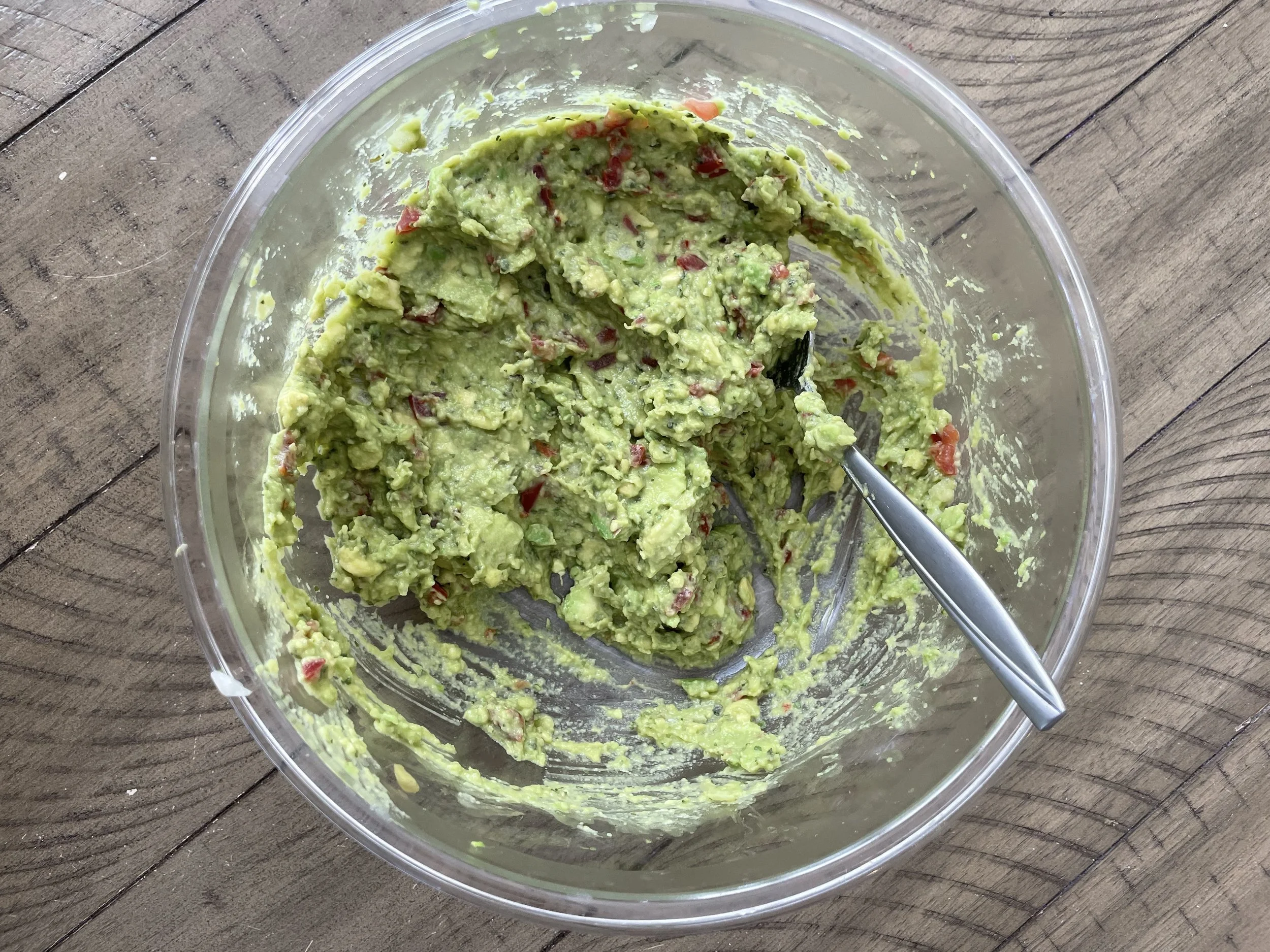
Baby-Friendly Guacamole Recipe 🥑
Ingredients:
3 ripe avocados
1 roma tomato, minced very fine
1 tsp minced garlic (or 1/2 tsp garlic powder)
2 tbsp lime juice
1 tbsp dried cilantro (or 1-2 tbsp fresh cilantro, finely chopped)
1 tbsp minced very fine onion
Instructions:
Mash all the avocado in a bowl until a smooth, creamy consistency
Add in tomato, lime juice, garlic, cilantro, and onion
Mix until well combined
Serve on preloaded spoons or spread on toast strips
Why This Works for Babies:
Avocado is soft, nutrient-dense, and packed with healthy fats
Everything is minced very fine (no chunks for choking)
The acidity from lime and tomato is minimal
No added salt
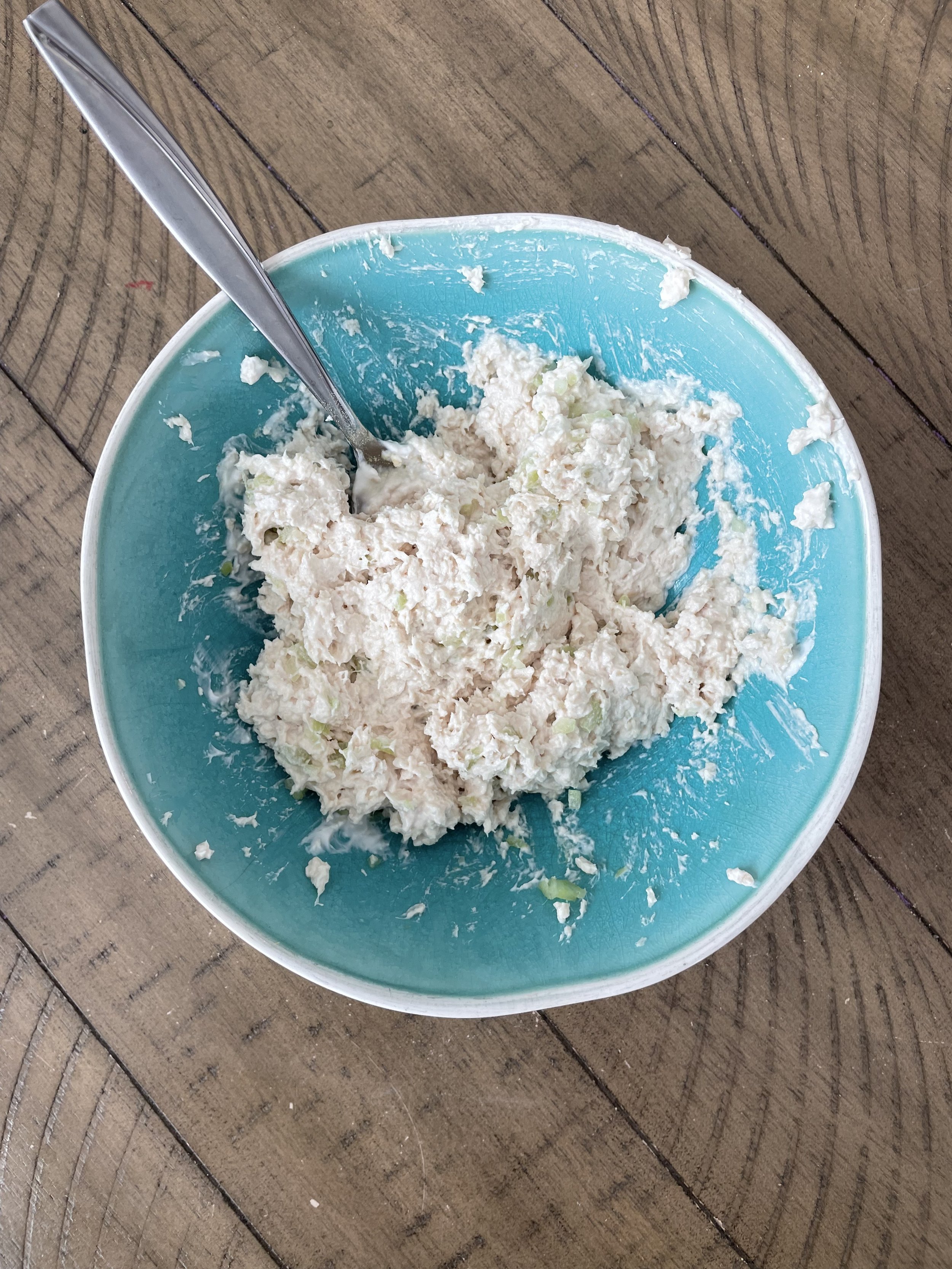
Baby-Friendly Chicken Salad Recipe 🍗
Ingredients:
1 cup Schnucks rotisserie chicken, minced very fine
1/4 cup plain full-fat Greek yogurt
1/2 tsp garlic powder
1/2 tsp onion powder
2 tsp minced celery, very finely minced
Instructions:
Mix all ingredients in a bowl until well combined
If it's too thick for baby to manage, add a little milk or breast milk/formula to thin it out
Serve on preloaded spoons or spread on toast
Why This Works for Babies:
Iron-rich and fat-rich
Minced very fine but adds texture for babies progressing through solids
Greek yogurt adds healthy fats and probiotics
Final Thoughts
Game day doesn't have to mean sidelined babies munching on bland puffs while everyone else enjoys the spread. With simple modifications and a little prep, you can create a safe, nutritious, and delicious appetizer tray that the whole family—babies included—can enjoy.
The key is understanding:
Age-appropriate textures and sizes
Choking hazards to avoid
How to modify family favorites safely
When to introduce new foods
When you have this knowledge, you can navigate ANY eating situation with confidence instead of panic.
Want to learn more about safe feeding practices?
We teach evidence-based baby-led weaning and safe feeding in my Safe Start to Solids course, where you'll learn:
How to introduce solids safely
Age-appropriate food preparation
Gagging vs. choking (and what to do)
Building healthy eaters from day one
Preventing picky eating
Check out our upcoming Safe Start to Solids community classes and private classes to get hands-on training, expert guidance, and all of your questions answered about starting solids! You deserve to feel confident and prepared!
If you’re looking for more self paced guidance and want more more recipe ideas for baby and how to modify, check out our Bite Sized Recipe Bundle. It’s packed with 50 simple, family-friendly recipes that allow you to have confidence in your feeding journey with your little one showing you how to modify family meals to be safe for baby. Not to mention it is also sprinkled with
Bite Sized Bits of education
Serving tips
8 Sample Feeding Schedules from 6-12 months (showing your how to wean bottle feeds)
Tips for reducing mealtime stress and navigating picky eating
Giving you a framework for your feeding journey with your baby!

What questions do you have about modifying foods for your baby or toddler? Drop them in the comments below!
And if you're gearing up for game day (or any family gathering), save this post so you have the recipes and modifications ready to go.
Let's make family meals inclusive, safe, and stress-free—one bite-sized modification at a time. 💙
Related Posts
— Baby’s First Foods: A Journey into Introducing Solids
— 6 Healthy Changes in Your Toddler That Might be Mistaken for Picky Eating
-
Medical/General: The content, information, opinions, and suggestions listed here have been created with typically developing children and babies in mind. The information here is generalized for a broad audience. The information here should by no means be used as a substitute for medical advice or for any circumstance be used in place of emergency services. Your child is an individual and may have needs or considerations beyond generally accepted practices. If your child has underlying medical or developmental differences, including but not limited to prematurity, developmental delay, sensory processing differences, gastrointestinal differences, cardiopulmonary disease processes, or neurological differences, we strongly recommend you discuss your child's feeding plan with the child's doctor, health care provider or therapy team. By accessing this site and the information in it, you acknowledge and agree that you are accepting responsibility for your child’s health and well-being. By using and accepting the information on this site, the author (Cierra Crowley) is not responsible for any adverse effects or consequences resulting from the use of any suggestions discussed. It is important to talk to your child’s pediatrician or medical provider to start anything new or make any changes.
Affiliation: this page contains affiliate links from which I can earn small commissions (at no additional cost to you).